Stretching 101: Loosen Tight Muscles Safely
Learn safe, effective stretching basics: warm-ups, technique, a 10-minute routine, and tips to relieve tight muscles without risking injury.
Foundations of Safe Stretching
Stretching is a gentle conversation between your nervous system and your muscles, aiming to enhance range of motion, reduce stiffness, and support balanced mobility. Safe practice starts with a clear intention: you are seeking a sensation of mild lengthening, not pain or tingling. Before holding any position, spend a few minutes warming up with light movement—think easy marching in place, arm circles, or a relaxed walk—to elevate tissue temperature and increase blood flow. This primes the fascia and prepares joints for motion. Approach each position slowly, pausing at the first barrier where resistance is noticeable yet manageable. Let your breath guide you; a steady exhale can soften protective muscle guarding. Avoid comparing sides; asymmetry is normal and often resolves with consistent practice. Keep your focus on posture cues such as a neutral spine and relaxed shoulders to prevent compensation. Over time, consistent, patient work builds tolerance, stability, and flexibility that transfers to daily tasks and recreational activity.
Technique That Protects Joints
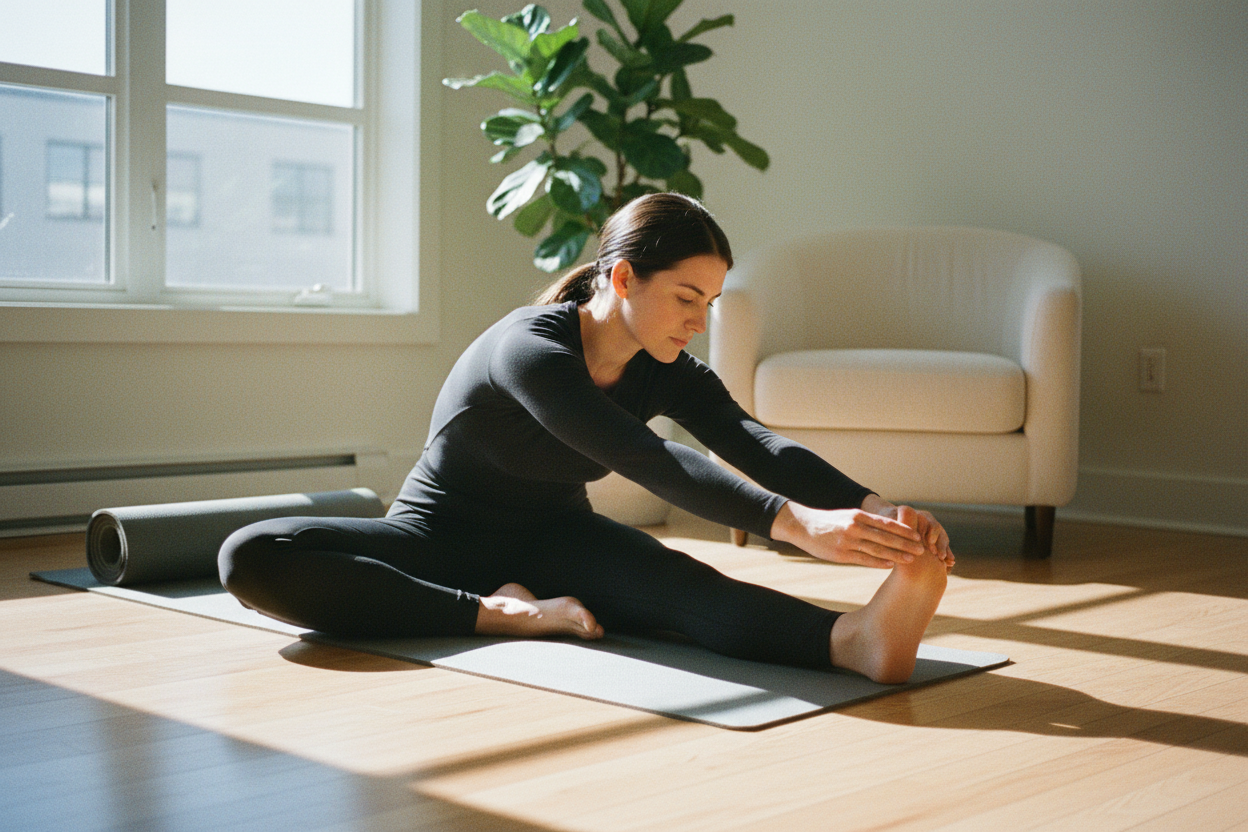
Choosing the right method at the right moment matters. Use dynamic stretching—controlled, rhythmic motions through comfortable ranges—before activity to wake up neuromuscular pathways without inducing excessive relaxation. Save static holds—calm, sustained positions—for the cooldown or on recovery days to encourage tissue lengthening and downshift the nervous system. In any style, emphasize alignment: stack ribs over pelvis, keep a soft bend in the knees, and spread the toes for a stable base. Move into each stretch on an inhale, then ease a little deeper during a slow exhale, maintaining control rather than forcing depth. Avoid bouncing, which can trigger a stretch reflex and increase tension. Use props like blocks, straps, or a towel to bring the floor closer and reduce strain on wrists or lower back. If you feel sharp pain, pins and needles, or joint compression, back out immediately and readjust. The goal is a sustainable practice that nourishes tissues while protecting ligaments and tendons.
Easing Common Tight Spots
Tight hips, hamstrings, calves, and chest can limit comfortable movement and posture. For hips, try a gentle half-kneeling lunge, tilting the pelvis slightly posteriorly to target the hip flexors without overarching the lower back; add a reach of the opposite arm for a diagonal line of length. For hamstrings, use a hinge at the hips with a neutral spine and a strap around the forefoot to keep the knee soft while lengthening the back of the leg. Calves respond well to a wall-assisted stretch with the heel down and the back knee straight, then bent, to address both gastrocnemius and soleus. To open the chest, place forearms on a doorway and step through gently to counteract rounded shoulders, or lie on a rolled towel along the spine to expand the front body. For the neck, explore slow side bends and gentle rotations while keeping shoulders heavy. Balance both sides, progress gradually, and stop if sensations travel or feel sharp. Small adjustments to angle and support can make all the difference.
Progression, Recovery, and Tools
Flexibility improves with thoughtful progressive overload—not by forcing depth, but by gradually increasing time under stretch, frequency across the week, and angles explored. Alternate active stretches, where muscles create motion, with passive holds supported by gravity or props to build usable ranges. Incorporate gentle isometric contractions at end range to teach your nervous system that these positions are safe, then relax into a slightly deeper point. Simple tools can help: a foam roller or massage ball offers light pressure to the myofascial tissues, increasing awareness and ease before you stretch. Hydration, adequate protein, and unhurried breathing support tissue recovery. Expect mild, diffuse soreness when you explore new ranges; respond with movement snacks, heat or a warm shower, and sleep. If discomfort concentrates in a joint or persists, scale back intensity and reassess technique. Record how positions feel, not just how far you go, to reinforce quality over quantity and smarter, safer progression.
Building a Sustainable Routine
Consistency beats intensity. Anchor stretching to daily cues you already perform: after brushing your teeth, during a mid-morning break, or right after a workout. Short, frequent sessions accumulate benefits and help your brain retain new motor patterns. Design a simple circuit covering hips, hamstrings, calves, chest, and thoracic spine, then rotate variations to keep practice engaging. Use a timer to prevent rushing, and breathe in a pattern that calms the parasympathetic system—for example, longer exhales than inhales. Respect recovery on demanding training days by choosing mobility flows rather than long static holds, then deepen stretches on restorative days. Check in with posture at your workspace: adjust chair height, vary positions, and stand up regularly to avoid prolonged stiffness. Seek individualized guidance if you're managing pain, recent injury, or complex conditions, and always stop with sharp pain, numbness, or dizziness. With patience and curiosity, you'll cultivate durable flexibility that supports movement, comfort, and confidence.