Quieting a Noisy Motor: Tips for Vibration and Noise Reduction
Learn practical ways to diagnose, isolate, and reduce motor noise and vibration - from mounting fixes to balancing, damping, and electrical checks.
Start with Smart Diagnostics
Before you quiet a noisy motor, invest time in diagnostics. Identify whether the sound is mechanical, electromagnetic, or aerodynamic. Listen during startup, steady operation, and coast-down; if the noise clearly tracks speed, suspect imbalance or misalignment. A rough growl can point to bearings, while a clear hum may indicate electromagnetic forces. Touch safe surfaces lightly to feel structure-borne vibration traveling through frames and mounts. Use a simple listening probe like a screwdriver handle to pinpoint the loudest areas on housings, endbells, and accessories. Compare noise under no-load versus load to isolate torque-related issues. Map a baseline of vibration and noise levels so you can measure improvements after each change. Check nearby components—loose guards, conduit, or panels often amplify sound. The goal is to separate causes from symptoms, focusing repairs on the true source rather than masking effects. A disciplined diagnostic pass prevents guesswork and reduces repeated tear-downs.
Secure Mounting and Effective Isolation
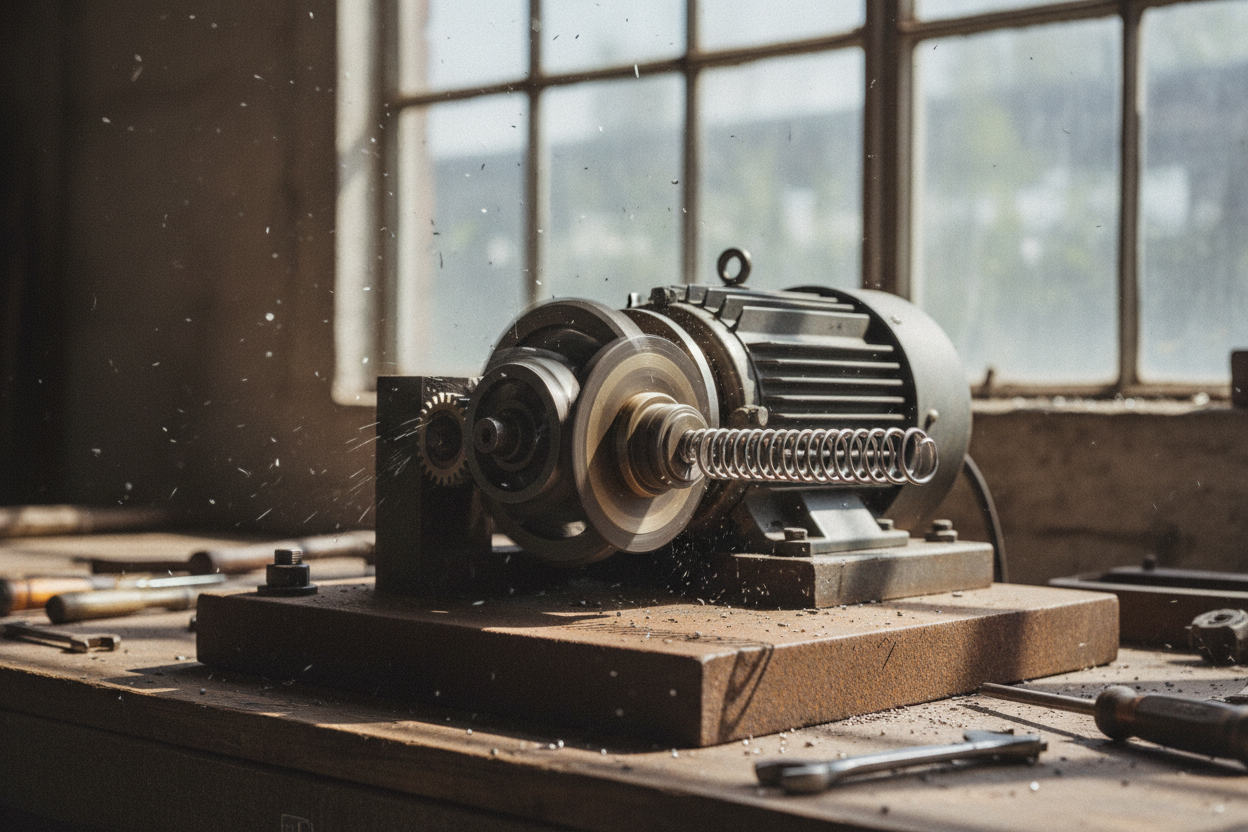
A motor can be quiet internally yet still seem loud if mounting is poor. Begin with a rigid base that resists flexing, and confirm flatness, level, and correct bolt torque. Use properly fitted shims to avoid twisting the frame. If the surrounding structure acts like a sounding board, introduce isolation. Elastomer pads or spring mounts break the path for structure-borne vibration; select isolators with a natural frequency well below running speed for meaningful attenuation. Avoid short-circuiting isolation by tightening conduit, pipes, or guards directly across mounts; use flexible connectors and maintain clearance. Increasing mass under the motor, such as an inertia base, reduces motion and lowers radiated noise. Check that foot bolts are not bottoming out and that washers fully bear on slots. Finally, verify that nearby panels and plinths are braced or damped; stiffening flimsy sheet metal often removes unexpected rattles and buzzes.
Precision Alignment and Rotor Balance
Two of the most common noise drivers are poor alignment and rotor imbalance. Misalignment—both angular and offset—induces alternating forces at the coupling, feeding vibration into bearings and frames. Use precise methods for shaft alignment, and do not rely solely on eyeing the coupling gap. Check soft foot conditions before final alignment, then lock the machine down in the same state used for measurements. Next, address balance. An imbalanced rotor, impeller, or fan produces speed-synchronous vibration that grows with RPM. If you cannot access formal balancing, a controlled trial-weight approach can indicate the heavy spot and required correction. Ensure keys, set screws, and fan blades are secure and evenly distributed. Replace bent or damaged couplings, and verify that coupling selection matches misalignment tolerance and torque demands. By eliminating alignment errors and restoring balance, you sharply reduce tonal components that cause resonance and audible drone.
Bearings, Lubrication, and Mechanical Health
Worn or poorly lubricated bearings are classic sources of noise. A rumbling, crackling, or cyclical tone often points to raceway defects, brinelling, or contamination. Follow correct lubrication intervals and amounts; over-greasing can churn, overheat, and increase noise, while under-greasing accelerates wear. Select appropriate grease consistency and base oil viscosity for speed and load, and protect against ingress with sound seals. For motors with sleeve bearings, confirm correct clearance and oil flow. In brushed designs, check brush wear, spring pressure, and commutator condition; in brushless systems, inspect endplay, retainers, and rotor-stator rubs. Misfitted bearings or distorted housings amplify noise, so verify fits, tolerance, and shaft straightness. Replace damaged components rather than masking symptoms with heavier grease. When bearings are healthy and correctly lubricated, friction drops, heat falls, and the motor's acoustic signature becomes notably calmer and more consistent.
Electrical Sources of Noise and Drive Settings
Not all noise is mechanical. Electromagnetic forces can produce a noticeable hum, especially under magnetic saturation or with uneven air gaps. With variable frequency drives (VFDs), PWM switching introduces tonal components and torque ripple that become audible through the structure. Adjust switching frequency, carrier settings, and low-speed control modes to shift or reduce objectionable tones. Consider output filters to smooth current and limit dv/dt, which also helps protect insulation. Use shielded motor cable, proper grounding, and short, tidy runs to minimize common-mode currents that excite vibration in housings and attached metalwork. Check voltage balance and supply quality, since imbalance elevates magnetic forces and bearing stress. For soft starters, controlled ramp-up reduces mechanical shock and associated rattle. By refining electrical parameters and ensuring robust wiring practices, you address a rich set of non-mechanical contributors to noise and vibration.
Taming Resonance with Damping and Enclosures
Even small forces can sound loud when they excite resonance. Identify flexible panels and supports that respond strongly at certain frequencies. You can shift these responses by stiffening with braces or by adding damping. Constrained-layer damping—a viscoelastic layer bonded between rigid sheets—converts vibration into heat, cutting radiated noise. Strategic mass loading can move resonances away from dominant forcing tones, while a modest tuned mass damper can suppress a specific peak. If airborne noise predominates, build an acoustic enclosure with absorptive liners and baffled air paths to maintain cooling. Preserve adequate ventilation and avoid recirculating hot air; a quiet motor is useless if it overheats. Ensure the enclosure itself is decoupled from the base and does not create new vibration shortcuts. Treat ducts, guards, and access panels with gaskets and damping foils to stop buzz. Combining damping, isolation, and airflow management often yields dramatic noise reductions.
Ongoing Maintenance and Noise Monitoring
Quiet motors stay quiet with maintenance. Establish baseline measurements for vibration and sound, then trend them over time to flag developing issues early. Inspect and re-torque fasteners, check alignment, and verify isolation hardware has not degraded or settled. Keep fans, filters, and cooling paths clean to prevent turbulence and tonal whistle. Plan regular bearing checks, lubricant inspection, and contamination control. After any change—new coupling, revised drive settings, or re-mounted base—perform a quick acceptance test and compare to the baseline. Document findings so future technicians understand what normal looks like. Train staff to recognize characteristic noises, from a bearing growl to a PWM whine, and to respond before small cues become large repairs. Always follow lockout procedures when touching rotating equipment. A disciplined monitor-correct cycle preserves performance, extends life, and keeps your motor reliably quiet.