AC vs DC Motors: How to Choose the Right Type
Confused between AC and DC motors? Learn how torque, speed control, efficiency, cost, and maintenance drive the right choice for your application.
Understanding Motor Fundamentals
Choosing between AC and DC motors starts with how each converts electrical energy into mechanical rotation. In any motor, magnetic fields in the stator interact with conductors in the rotor to produce torque, and the match between speed, load, and control strategy determines performance. AC motors are powered by alternating current and typically rely on line frequency or a variable frequency drive to set speed. DC motors are supplied by direct current and control speed through voltage or electronic commutation. When selecting, map the application: continuous, intermittent, or cyclic duty; the required starting torque; expected peak and average power; and acceptable vibration and noise. Consider environment too: temperature, dust, moisture, and altitude all influence cooling and insulation class. Finally, think about maintainability and integration with sensors, brakes, and gearboxes. A clear requirements list helps you balance cost, efficiency, precision, and reliability so the chosen motor delivers durable service without overengineering.
How AC Motors Deliver Power
AC induction motors dominate industry because they are robust, affordable, and simple to maintain. Their rotor is shorted, and rotating stator fields induce currents that create torque, which is why they are often called asynchronous machines. Paired with a VFD or soft starter, they provide smooth ramp up, adjustable speed, and energy savings in variable torque loads like pumps and fans. Synchronous AC motors lock rotor speed to the electrical frequency and excel where tight speed regulation or high power factor is needed. Single phase models suit small appliances, while three phase units handle conveyors, compressors, and HVAC equipment. Strengths include long bearing life, standardized frames, and good efficiency under steady loading. Watch for limitations: reduced starting torque in some designs, possible harmonic distortion from drives, and the need for proper cooling at low speeds. With correctly sized drives, filters, and sensors, AC solutions offer high reliability with minimal scheduled maintenance.
Why and When to Choose DC Motors
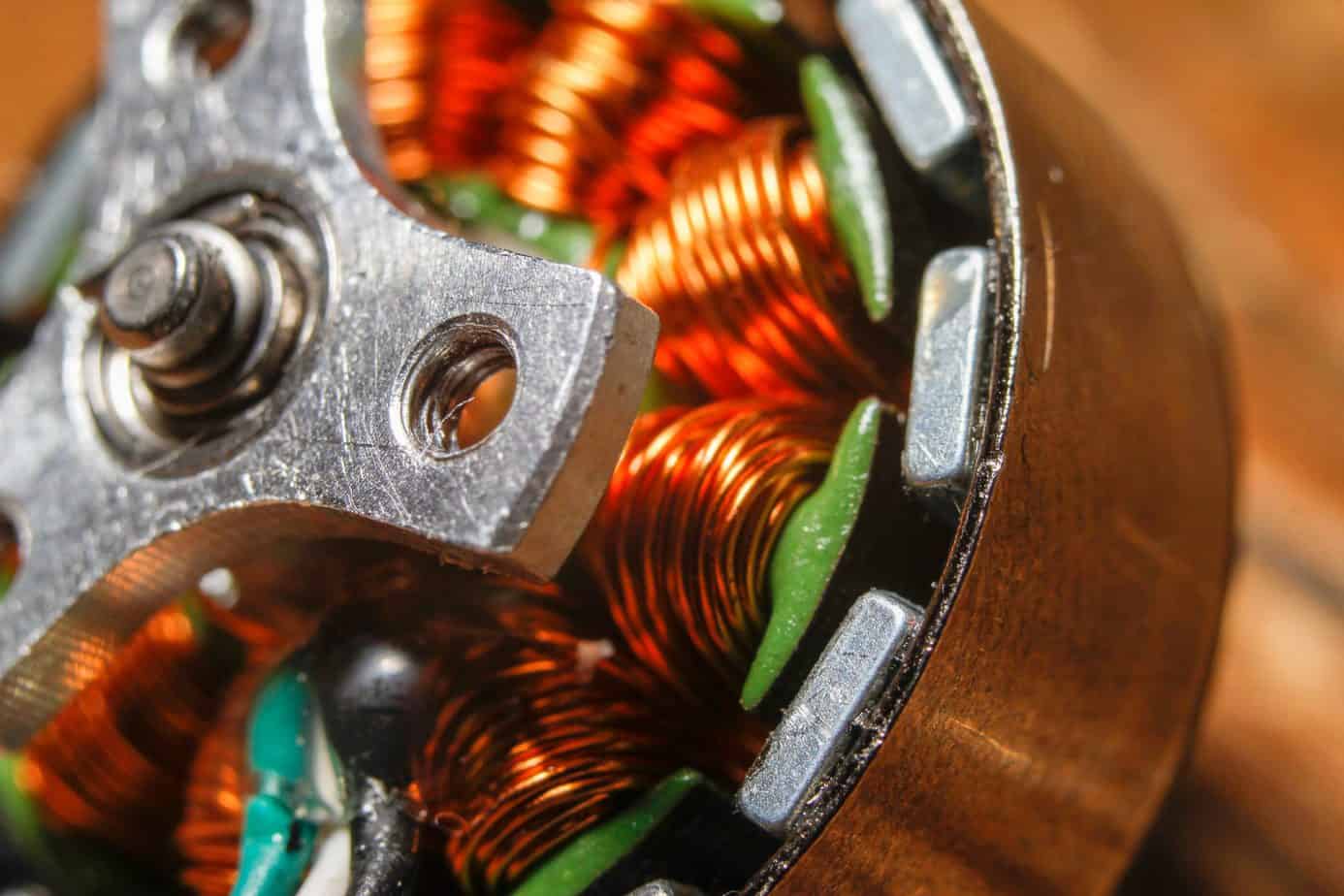
DC motors shine when applications demand responsive control, high starting torque, or battery operation. Traditional brushed designs are inexpensive and produce excellent low speed pull, but brushes wear and generate electrical noise that requires periodic maintenance. Brushless DC motors remove brushes and substitute electronic commutation, delivering higher efficiency, quieter operation, and longer life, especially at high speeds or in clean environments. Their compact size and torque density make them ideal for robotics, drones, portable tools, and precision motion stages. Speed and position can be held tightly using pulse width modulation, hall sensors, or encoders, and dynamic braking offers rapid stops. Trade offs include the cost and complexity of controllers, thermal management in small housings, and careful matching of winding and drive voltage. When power must come from batteries or when control bandwidth and smoothness matter more than absolute simplicity, DC options can be the most capable and compact choice.
Decision Framework: Load, Speed, and Control
Build your selection around the load profile. Plot the required torque speed curve, including start up surges, steady segments, and transients, then calculate inertia so you can predict acceleration time and peak current. If the system needs wide speed range with modest torque, an AC motor with a VFD often wins. If it needs immediate full torque at zero or precise position control, a DC brushless motor with feedback may be superior. Define duty cycle and thermal class to avoid overheating during frequent starts and stops. Add braking or holding torque requirements, especially for vertical axes and safety stops. Determine how precise regulation must be, from open loop tolerance to closed loop servo control. Then align mechanical interfaces: shaft size, keying, gearbox ratio, and coupling stiffness. By reducing unknowns early, you right size the motor and drive, minimize oversizing, and ensure stable control without oscillation or excessive energy consumption.
Power Supply, Integration, and Efficiency
Your available power often narrows the path. Facility grids favor AC motors driven directly or by VFDs, bringing simple wiring and strong parts availability. Mobile platforms and remote systems favor DC motors because batteries, solar chargers, and fuel cells natively supply direct current. Assess drive electronics: regenerative capability for energy recovery, current limits for protection, and filters for electromagnetic compatibility. Evaluate efficiency at typical loads rather than rated points; many systems operate far below nameplate power, so partial load performance and drive switching losses matter. Plan cooling with airflow, heat sinks, or liquid plates when space is tight. Consider power quality factors such as harmonics, voltage sag ride through, and grounding to protect sensors and communication lines. Integration extends beyond wires: choose enclosures and ingress protection to match dust and moisture, specify connectors and cable shielding, and organize control panels so maintenance and diagnostics are straightforward and safe.
Total Cost and Future Proofing Your Choice
The best motor is the one that minimizes total cost over its life. Combine purchase price, installation, controls, energy use, and downtime into a single TCO view. AC induction platforms often offer the lowest cost per kilowatt and minimal upkeep, while brushless DC delivers superior controllability and density where space and responsiveness are critical. Look for modular drives, standard communication protocols, and diagnostic features that simplify commissioning and analytics. Predictive maintenance using vibration, temperature, and current signatures reduces unplanned stops and extends bearings and insulation life. Verify spare part availability, vendor support, and documentation quality. For sustainability, prioritize high efficiency models, recyclable materials, and right sizing to cut wasted power. Finally, leave room for change: select motors and drives with overhead in current, I O, and firmware so future speed ranges, payloads, or process improvements can be adopted without redesign.